Beyond the Chatbot: Integrating Agentic AI to Automate High-Value Business Workflows
Discover how Agentic AI moves beyond simple chatbots to automate complex, multi-step business workflows and drive tangible ROI.
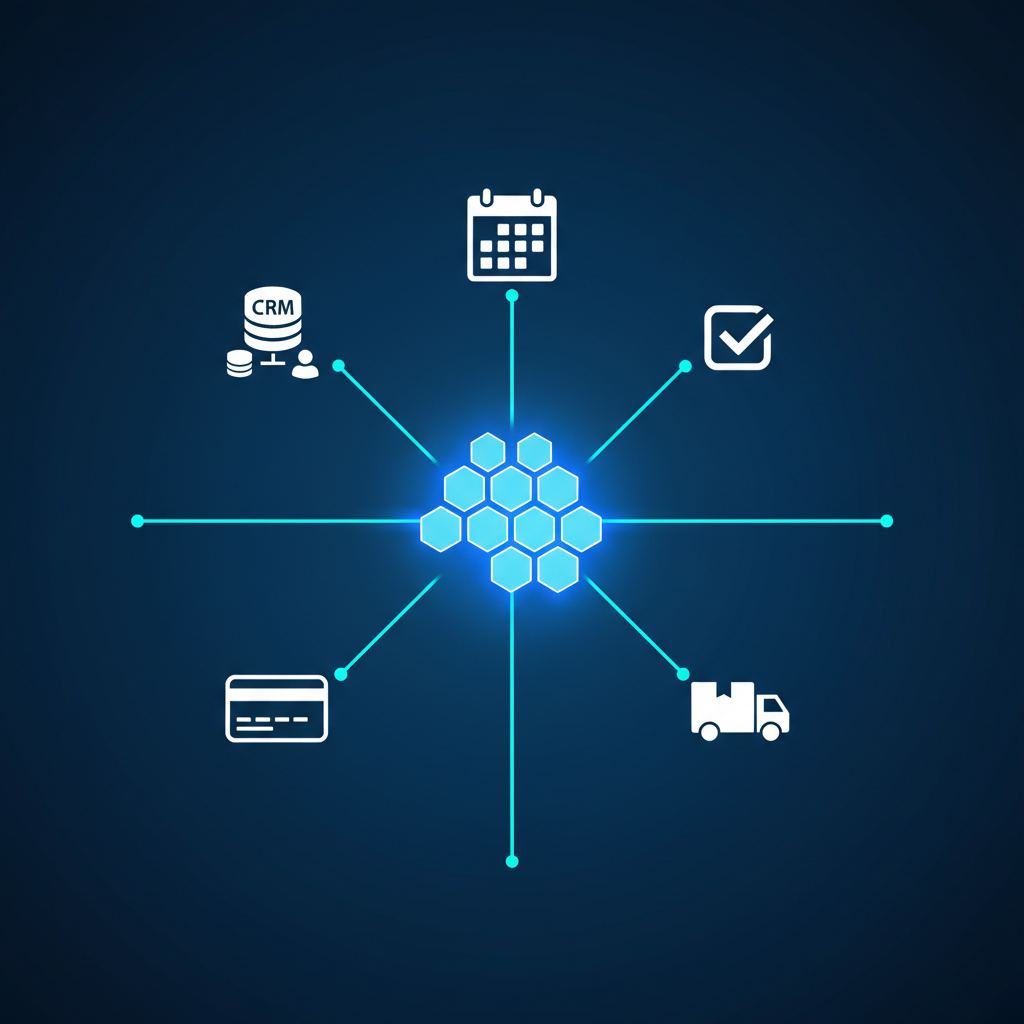
Moving From Conversation to Action
For the past two years, the business world has been captivated by Generative AI, largely through the lens of the chatbot. We’ve used these tools to draft emails, summarize long documents, and provide quick answers to internal queries. While these "copilot" interactions provide significant individual productivity boosts, they often remain isolated tasks. The human is still the "glue" that connects one system to another.
The next frontier of business transformation is Agentic AI. Unlike a standard chatbot that waits for a prompt and responds with text, AI Agents are designed to achieve goals. They can plan multi-step processes, use external tools, access databases, and make autonomous decisions to complete complex, high-value workflows without constant human hand-holding.
What is Agentic AI?
At its core, Agentic AI refers to AI systems that possess agency. This means the system doesn't just predict the next word in a sentence; it uses reasoning capabilities to interact with the world. Think of it as moving from a digital assistant to a digital teammate.
The Key Characteristics of AI Agents:
- Goal-Oriented Reasoning: You give the agent an objective (e.g., "Onboard this new vendor"), and it breaks it down into sub-tasks.
- Tool Use (Function Calling): Agents can "talk" to your CRM, ERP, email, and accounting software via APIs.
- Self-Correction: If an agent encounters an error or a missing piece of data, it can iterate and attempt an alternative path to the goal.
- Autonomous Execution: They can operate in the background, only surfacing to a human for final approval or when they encounter a high-stakes decision.
High-Value Business Workflows for Agentic AI
Integrating Agentic AI isn't about automating simple FAQs; it's about solving the "middle-office" friction that slows growth. Here are several departments where agentic systems are currently driving massive ROI:
1. Revenue Operations (RevOps) and Lead Management
A standard chatbot can capture a lead on a website. An AI Agent, however, can research that lead’s LinkedIn profile, cross-reference their company’s annual report for relevant pain points, check the internal CRM for past touchpoints, and draft a personalized outreach sequence. It can then monitor for a reply and automatically book a meeting on the sales rep's calendar based on specific availability rules.
2. Intelligent Supply Chain & Procurement
Modern supply chains are volatile. An agentic system can monitor inventory levels across various warehouses. When stock falls below a threshold, the agent doesn't just alert a human; it can reach out to multiple pre-approved vendors for quotes, compare lead times and pricing, and present a pre-filled purchase order for the procurement manager’s signature.
3. Client Onboarding and Compliance
In industries like finance, law, or healthcare, onboarding a new client involves mountains of paperwork and verification steps. AI Agents can automate "Know Your Customer" (KYC) checks by extracting data from identity documents, validating them against public databases, and flagging only the discrepancies for human review. This shifts the human role from data entry to exception handling.
The Architecture of an AI Agent
To move beyond the chatbot, businesses must implement a specific architectural stack. At Fifty Five 11, we focus on four primary layers:
- The Brain (LLM): The foundational model (like GPT-4o or Claude 3.5 Sonnet) that handles reasoning and language understanding.
- Memory: Long-term storage (Vector Databases) that allows the agent to remember project history, company policies, and past interactions.
- Planning: The logic layer that breaks a complex prompt into a step-by-step sequence of actions.
- Action (Tooling): The integrations that allow the agent to read/write to your existing business software.
The Shift in Human Roles: Managing the "Digital Workforce"
One of the most common concerns regarding AI integration is the displacement of roles. However, the shift toward Agentic AI creates a new, more strategic role for employees: The Human-in-the-Loop (HITL) Manager.
Instead of manually performing repetitive tasks, employees become supervisors of AI agents. They set the parameters, define the "guardrails" (what an agent can and cannot do), and focus their efforts on high-level strategy, creative problem-solving, and relationship management. This transition allows small businesses to scale their output without exponentially increasing their headcount costs.
Strategic Implementation: How to Start
Deploying Agentic AI requires a more measured approach than simply installing a ChatGPT plugin. Businesses should follow a strategic roadmap:
Step 1: Identify "Bottleneck" Workflows
Look for processes that are high-volume, data-intensive, and follow a general set of rules but require interaction with multiple software platforms. These are your prime candidates for automation.
Step 2: Ensure Data Readiness
An agent is only as good as the data it can access. Clean, structured, and accessible data is the fuel for Agentic AI. This often involves migrating legacy systems to cloud-based environments with robust APIs.
Step 3: Define Guardrails and Governance
Security is paramount. You must define what "privileged access" the AI has. What budget limits can it authorize? What data can it see? Establishing these rules early prevents hallucinations and unauthorized actions.
Step 4: Pilot and Iterate
Start with a single "narrow" agent—perhaps a customer support agent that can actually issue refunds or a scheduling agent that manages internal resources. Once the ROI is proven, expand to more complex, cross-departmental orchestrations.
Why Partner with AI Consultants?
The leap from a chatbot to a fully integrated agentic system is technically complex and involves significant risk management. At Fifty Five 11, we specialize in bridging the gap between cutting-edge AI capabilities and real-world business outcomes. We don't just "talk" to AI; we build the systems that put AI to work.
Is your business ready to move beyond the chat bubble? Contact Fifty Five 11 today to learn how our technology consulting services can help you design and deploy autonomous AI agents that drive growth and efficiency.
Related reading
Explore our AI consulting, technology consulting, small business lending, or browse all resources.
Need Expert Guidance?
Ready to implement these insights in your business? Our experts are here to help you navigate your technology transformation journey.